
These Holy Ruins
On Faith, Friendship, and the People Who Shape Us

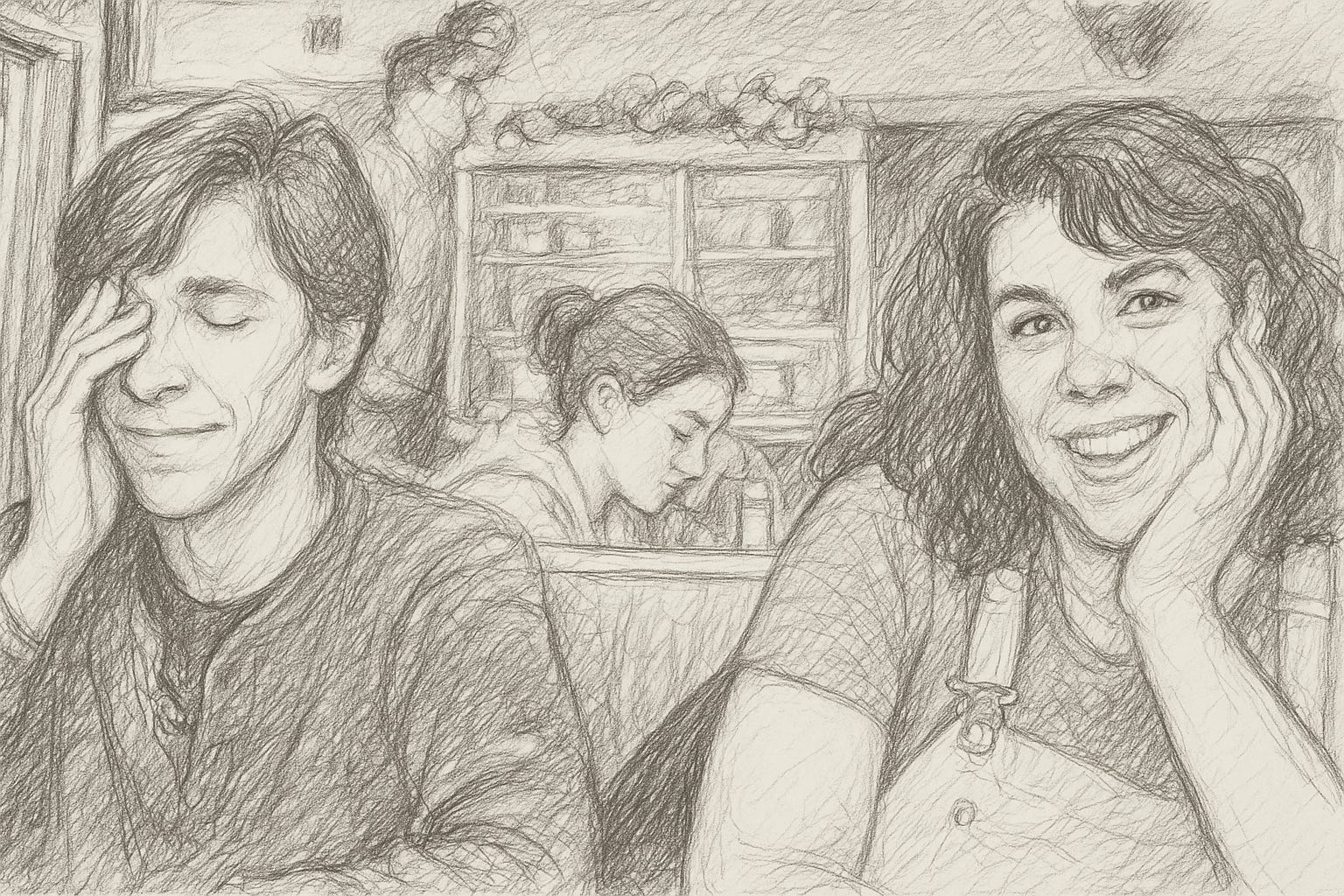
Some people leave fingerprints on our becoming. Some fade quietly. Some burn bright and vanish in a flash. And some linger, not because of how things ended, but because of how they began.
Call it midlife, call it transformation, call it finally having the courage to stop running from the past, but lately I’ve found myself taking inventory of the people who built me. Not just the obvious ones—family, partners, mentors—but the unexpected architects: the friends who were there at the exact moment something inside me was shifting—the ones who arrived at the fault lines.
I reached out to one of those people recently—a friend who, in another lifetime, spoke the same language of faith that I once did. We were two theology-obsessed twenty-somethings at Seton Hall, spending lunch hours arguing about grace, free will, and whether pets had souls. (For the record: obviously yes. I was right then, and I stand by it now.)
We were naïve and earnest, sometimes painfully so. When a dorm fire claimed students we both knew, we clung to each other through the grief. In the shadow of that loss, faith became both anchor and weapon. We prayed, debated, and searched for meaning. And somewhere along the way, things got messy. Not particularly scandalous, just human. I was a new wife and soon-to-be mother, quietly unraveling and overwhelmed, watching the faith I’d built my life around begin to crack. My friendship with him became an escape hatch, a codependent kind of comfort I mistook for grace.
And if you grew up religious, you probably know this too well: it is terrifying to admit when the faith that once held you has stopped fitting. So you cling to what you can—people, rituals, answers you’ve long outgrown. You hold your breath and hope it will all somehow still make sense.
When our paths inevitably diverged, it was partly because we both held on so tightly to what we believed. His certainty felt like safety. My questions felt like rebellion. But looking back now, I see that both of us were trying to find God in a world that wouldn’t stop burning.
Maybe that’s why I finally reached out again after all these years. Not to reopen old wounds, not to rekindle anything, but to acknowledge the role he played in my story. To let him know that the book I wrote, CHRISTBOT, grew from the same hunger that once sent us combing through scripture like treasure hunters. It’s a book about faith and doubt and the electric tension between them—about the courage to keep asking the questions that faith sometimes punishes you for asking.
In writing it, I wasn’t trying to reconstruct my old faith. I was trying to sift through its ruins, looking for what still felt holy. What I’ve learned, again and again, is that love survives the collapse, even though the scaffolding of belief may crumble. Love, wonder, kindness—the parts that actually matter—don’t disappear just because the structure that held them up falls apart.
When I hit “send” on that email to him, I wasn’t seeking approval or absolution. I didn’t need either. I just wanted to say: Look. I kept the best parts of what we learned. I kept the love, the laughter, the wonder. I just stopped being afraid of the questions.
Growing up is such a quiet, sneaky miracle. You realize the people who shaped you don’t have to stay to keep teaching you. They’ve already done their part, even if they never meant to. And the rest—the rebuilding, the questioning, the healing, the holy work of becoming—is yours alone.
Faith, I’ve learned, doesn’t have to mean certainty. Sometimes it just means having the courage to reach across time, trusting that love, in whatever form it takes, still counts as holy.
And sometimes it means acknowledging that the ruins weren’t a failure—they were the beginning of something more honest, more spacious, more you.